


2 3 4 Player Mini Games
Better World Games
I picked up 2 3 4 Player Mini Games expecting a quick collection for passing around a phone, and that is exactly where it makes the most sense. It is a free simulation game from Better World Games, built around short competitive activities for two, three, or four people on one device. I found it much more enjoyable as a shared break than as a solo game, because the fun comes from seeing everyone react at the same time rather than from building a long-term personal progression.
The basic idea is easy to understand: place the phone on a table, choose a mini game, and let the group compete. That simplicity is a major strength. I do not need to explain a complicated story, create accounts, or spend several minutes teaching controls before someone can join. At the same time, the collection is best approached as a party game rather than a deep simulation experience. If you want detailed strategy, a campaign, or a carefully balanced competitive ladder, this is probably not the right match.
How the game feels to read, navigate, and share
A quick start that suits a group
The interface is designed around immediate play. The store summary promises activities for two, three, and four players, and that group focus is clear in use: the phone becomes the shared game board, with each person taking a position around it. This arrangement works well during a family visit, a short wait, or a casual evening when nobody wants to commit to a large console game.
I especially like that the concept is understandable before anyone has mastered the controls. The mini-game format reduces the amount of text a player has to process. Instead of learning a large menu system or reading a long tutorial, I can select an activity and discover its rules through the short play session. That makes it approachable for people who do not normally play mobile games.
Readability still depends on the physical situation. A phone placed flat on a table is easy for the people closest to it, but the display can become harder to follow when four players lean in from different angles. A larger screen would be more comfortable for a group, while a small phone can make icons and movement feel crowded. I would therefore choose a bright, stable surface and keep the device close enough for everybody to see without stretching across the table.
Related News

Why WhatsApp Messenger Still Makes Everyday Communication Feel Easy

Jurassic World: The Game Is the Better Dino Tycoon for Strategic Players

Threads in Real Life: Who Should Join, Lurk, or Leave

How SHEIN Turned Shopping Into an Endless Content Feed

How to Make Fortnite Feel Smarter on Mobile

Should You Switch to Microsoft Outlook on Mobile?
Why the short format helps mixed-experience groups
One useful quality is the low penalty for being new. In a longer multiplayer game, an experienced player can build an advantage that makes a beginner feel lost for the rest of the session. Here, the short activities allow people to reset their expectations repeatedly. Someone who performs poorly in one round can still enjoy the next one, and a player who has never touched the game can join without feeling that they have missed hours of preparation.
That does not mean every activity will feel equally fair to every person. Fast reactions, precise taps, and quick visual decisions can favor players who are already comfortable with touchscreens. I found that the best sessions came from treating the game as a social activity first and a serious competition second. Changing the order of players or agreeing not to tease someone who is learning makes a noticeable difference.
The large audience suggests that this format has broad appeal: the game has an average rating of 4.3 from around 1.4 million ratings and has passed 100 million installs. Those figures do not replace personal testing, but they do fit my impression that the concept is easy for many people to understand. Its content rating is Everyone, which also makes it more suitable for mixed-age settings than games built around mature themes.
Gallery
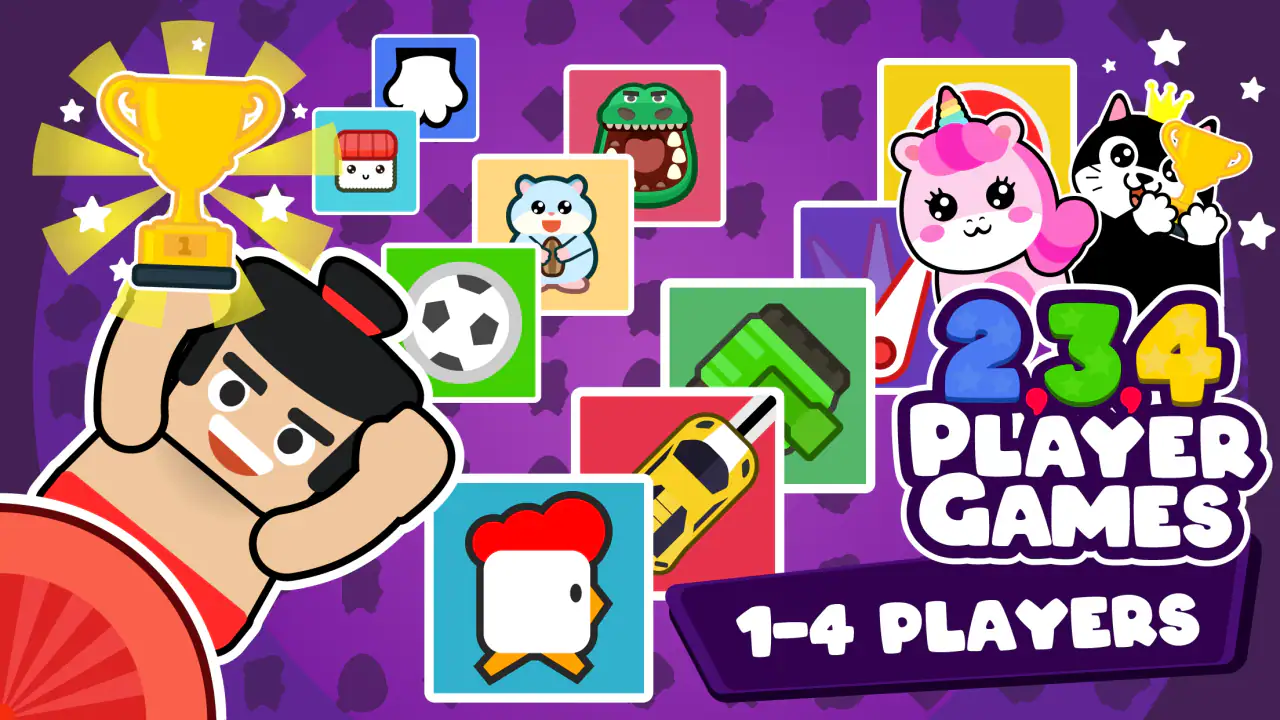
Controls and motor demands
The central accessibility question is not whether the game has a formal accessibility label; it is whether each person can comfortably interact with a shared touchscreen. In my experience, the answer varies by mini game and by the player’s hand control. Some activities are naturally manageable with simple taps or short movements. Others can become difficult when they demand speed, repeated input, or accurate contact with a small area.
That distinction matters for children, older players, and anyone with limited dexterity or hand fatigue. A person may understand the goal perfectly but still struggle to respond quickly enough. Because the phone is shared, there is also little room to change the physical arrangement for one player without affecting everyone else. I would place the device on a non-slip surface and avoid holding it in the air, since passing or gripping the phone can add unnecessary strain.
There is a practical way to make sessions more inclusive: use the mini games as a rotating set rather than insisting that every player compete in every activity. If one type of movement is uncomfortable, the group can move on and keep that person involved as a judge, score watcher, or commentator. This is not a built-in accessibility solution, but it is a realistic group habit that preserves participation without pretending that every challenge suits every ability.
Visual and sensory comfort
Shared play creates a few sensory considerations that are easy to overlook. Four people looking at one small screen can produce crowding, glare, and awkward viewing angles. I would avoid direct sunlight, lower the surrounding visual clutter, and take breaks between rounds if anyone becomes tired. Those simple changes improve the experience more than trying to force a long uninterrupted session.
Players who rely on audio cues may find a shared environment unpredictable. A noisy room, conversation, or background music can make it harder to notice what is happening. I would not assume that sound alone is enough to communicate every important event, so the group should watch the display and explain a rule aloud when someone needs help. Likewise, a player with reduced vision may need to sit closest to the phone, which works best when the group agrees on seating before starting.
Touchscreen feedback can also be less comfortable for people who dislike rapid flashes, busy motion, or constant competition. The game’s quick party structure encourages excitement, but excitement is not the same as comfort. Short sessions, a calmer room, and permission to skip a particular activity are sensible adjustments. They also help younger players who may become overstimulated when several people react loudly around one device.
Using it in everyday situations
I can see this game working particularly well when a group has only a few spare minutes. Imagine three friends waiting for food at a casual restaurant: one person places the phone on the table, everyone joins the same activity, and the round ends before the conversation has completely stopped. It also fits a family gathering where some people are regular gamers and others normally avoid controllers. The rules are light enough to invite participation without turning the evening into a lesson.
It is less suitable on a crowded bus, in a dark room, or anywhere the phone may be bumped or dropped. Four people gathered around one screen need physical space, and that requirement can matter more than the software. I would also avoid using it while walking or in any situation where attention needs to stay on the surroundings. The game is social, but it still asks everyone to focus on the same device.
For remote friends, this is not a substitute for a conventional online multiplayer game. Its strongest use case is local, face-to-face play. If your group is separated by distance, a game with individual screens and built-in online matchmaking will be more practical. If your group is together but wants a deeper experience, a board game or a full console title may offer more strategic space and better long-session comfort.
What the developer’s approach gets right
Better World Games has kept the central idea focused instead of burying it under a complicated structure. The current version is 5.7.3, and the game remains free, which removes a financial barrier for someone who simply wants to test it at a gathering. It supports devices running Android 5.0 or later, so it is not limited to only the newest phones. Those details make it easier to bring into a mixed-device household, although the actual comfort of group play still depends on the screen and hardware available.
The strongest design decision is the emphasis on shared discovery. A new player can watch others for a moment, try an activity, and understand the rhythm quickly. That is more welcoming than a game that assumes everyone knows virtual controls. It also gives families a natural way to help one another: an experienced player can demonstrate a movement without taking over the whole session.
There is a trade-off here. A streamlined game can be inclusive at the entry point while still being uneven in its demands once play begins. Easy navigation does not guarantee that every activity will be comfortable for every hand, eye, or reaction speed. I would judge it by how flexibly your group uses the collection, not by expecting every mini game to work equally well for everyone.
Where the barriers remain
The shared-device format is the biggest limitation. A player who needs a larger display, a different viewing distance, or more time to respond cannot independently adjust the experience without changing the setup for the whole group. The game is therefore more accessible as a relaxed social activity than as a one-size-fits-all competitive test.
Another barrier is social pressure. Fast rounds can make a person feel exposed if everyone is watching a missed input. This matters especially for children, first-time players, and anyone who is self-conscious about coordination. I recommend explaining before starting that the goal is to keep the group involved, not to prove who has the quickest fingers. Rotating through different activities and celebrating funny outcomes helps reduce that pressure.
The game may also disappoint players who want predictable depth. Short mini games are excellent for variety, but they do not provide the same control customization or long-term mastery that a dedicated title can offer. A conventional board game may be better when your group needs slower turns, larger physical pieces, or a more deliberate pace. A solo puzzle game may be preferable when you want full control over the screen and no audience.
Storage and technical comfort are practical considerations too, although the game’s broad device support is helpful. Before a group session, I would update the game, close distracting apps, charge the phone, and clear enough table space for everyone to reach it. These are small preparations, but they prevent the most common frustrations in a shared mobile session: interruptions, unstable handling, and players being unable to see the action.
Who should try it, and who should skip it
I recommend it to families, roommates, couples who want a playful challenge, and friends looking for something that starts quickly. It is particularly good for groups with different gaming backgrounds because nobody needs to understand a large fictional world or memorize a complicated control scheme. The Everyone age rating supports its use in family settings, provided an adult chooses activities and pacing that suit the people present.
I would be more cautious about recommending it to someone who plays alone most of the time. The game’s identity depends on local interaction, so its value drops when there is no group around the same phone. I would also point experienced competitive players toward a more specialized multiplayer game if they care about precise balance, advanced strategy, or a persistent ranking system. This collection is about quick shared moments, not serious tournament preparation.
For a person with motor or visual limitations, I would suggest trying one short session with the phone positioned carefully before deciding. Sit close enough to read the screen, keep the device stable, and let the player choose whether to participate in every activity. If those adjustments still leave the person uncomfortable, a larger-screen game with individually configurable controls would likely be a better choice.
My inclusive verdict
After spending time with it, I see 2 3 4 Player Mini Games as an approachable local party game whose greatest accessibility feature is its willingness to let people begin without much preparation. The free price and simple format make experimentation easy, while the broad install base shows how naturally the idea fits casual mobile play. The developer has made something that can bring non-gamers into the same activity as regular players.
Its limits are just as important. The small shared screen, changing motor demands, possible visual crowding, and social pressure mean that inclusion depends heavily on the group’s choices. It is not the right tool for every ability or every setting, and I would not present it as a replacement for games with adjustable controls or individually tailored displays.
My advice is to treat each session as a flexible social experiment: choose a comfortable surface, seat players thoughtfully, explain rules aloud, rotate activities, and allow anyone to skip a challenge without losing their place in the group. Used that way, the game does what it promises in spirit: it turns one phone into a reason for several people to laugh, compete lightly, and spend a few minutes together.
FAQs for 2 3 4 Player Mini Games
What is 2 3 4 Player Mini Games?
2 3 4 Player Mini Games is a collection of simple, enjoyable games designed for multiplayer fun. It allows 2 to 4 players to compete on a single device, offering a variety of mini-games. The app is perfect for parties or gatherings where friends and family can join in the fun without needing multiple devices.
How do I play 2 3 4 Player Mini Games?
To play, simply download the app on your Android or iOS device. Once installed, select the number of players and choose from the available mini-games. Each game has straightforward controls, often requiring just simple taps or swipes, making it easy for players of all ages to join in and enjoy.
Are there any in-app purchases in 2 3 4 Player Mini Games?
Yes, while 2 3 4 Player Mini Games is free to download and play, it offers in-app purchases. These purchases can unlock additional games or remove ads for a more seamless experience. However, the core games are accessible without spending money, providing plenty of entertainment for free.
Is 2 3 4 Player Mini Games suitable for children?
Yes, the app is suitable for children and features age-appropriate content. The games are simple and fun, with no violent or inappropriate material. Parents can feel comfortable allowing their children to play, and the multiplayer aspect makes it a great choice for family game nights.
Can I play 2 3 4 Player Mini Games online with friends?
No, 2 3 4 Player Mini Games is designed for local multiplayer gameplay. Players must be physically present to compete on the same device. This setup encourages face-to-face interaction and fun, making it ideal for social gatherings where everyone can join in on the excitement.
Pros
- Great for quick
- fun multiplayer sessions.
- Simple controls make it easy to pick up.
- Variety of mini-games keeps it engaging.
- Offline play available for on-the-go gaming.
- Colorful graphics appeal to all ages.
Cons
- Limited to local multiplayer only.
- Some games feel repetitive over time.
- No single-player mode available.
- Ad interruptions can be frequent.
- Lacks depth for long gaming sessions.


